


As summer arrives, sustained high temperatures hit many regions across the country. Human metabolism accelerates, so laundry baskets fill up faster than usual, with protein stains such as blood, milk and food residues increasing sharply.
Many consumers encounter a common problem in summer: even reputable liquid laundry detergents lose their stain-removing performance after two to three months of summer storage. Beyond detergent dosage and water volume, one core ingredient sustaining long-lasting cleaning efficacy is detergent enzymes. As natural biocatalysts aligned with green and high-efficiency cleaning trends, they break down stubborn stains at the molecular level. However, the intense heat during summer storage and transportation, together with high-surfactant formulations, readily denatures conventional enzymes and renders them inactive.
Bestzyme PuriWise protease solutions for laundry leverage directed evolution and molecular stabilisation engineering to reinforce enzyme structural stability under high temperatures and high-surfactant conditions. They deeply degrade protein stains and effectively resolve activity decay in summer detergents, meeting the detergent industry' s trend toward concentrated formulations and long shelf-life performance.
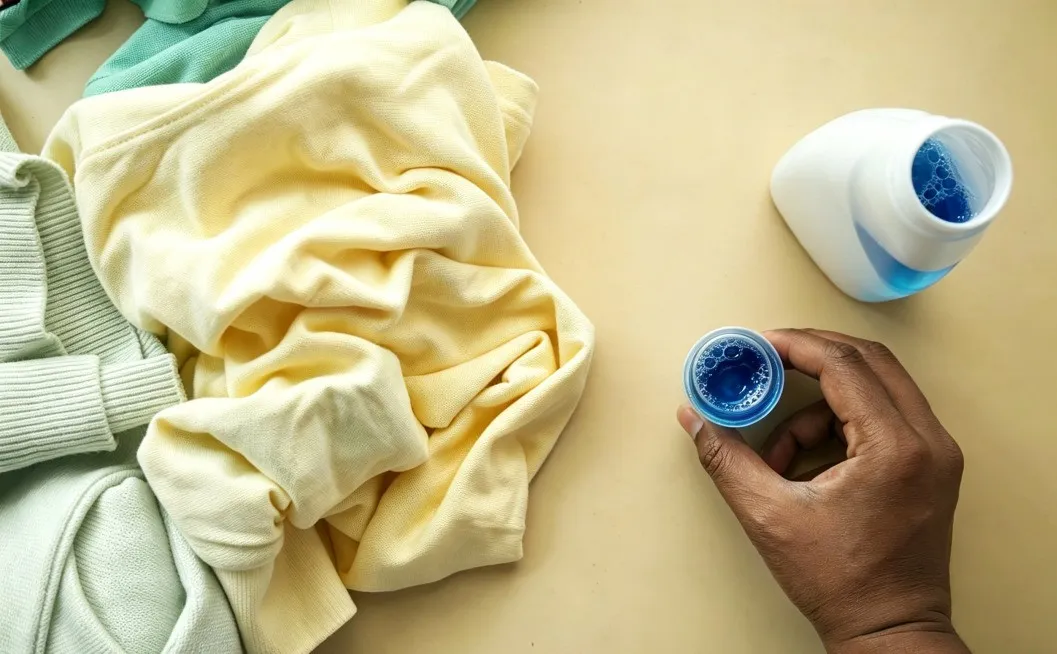
Blood, milk and sauce stains frequently seen on summer fabrics are mainly composed of large protein molecules. Such stains feature strong colloidal adhesion and fibre cross-linking. At room temperature and upon drying, protein molecules fold and precipitate, adhering tightly deep within the pores of cotton, linen, polyester and other textile fibres like glue. Conventional surfactants — the basic foaming and cleaning components in detergents — primarily emulsify surface grease and dust by lowering water surface tension, with limited capacity to remove cross-linked protein networks embedded deep inside fibres.
Alkaline protease is a highly substrate-specific biocatalyst that drives targeted chemical hydrolysis of proteins during washing:
Specific recognition and binding: The active site of the protease recognises and binds to specific amino acid residues in large protein stain molecules through molecular complementarity.
Efficient peptide bond hydrolysis: Its catalytic triad rapidly attacks and cleaves peptide bonds (-CO-NH-) along protein chains, fragmenting insoluble macromolecular protein networks.
Polarity shift and rinse-off: Hydrolysis breaks proteins into small peptides and free amino acids with greatly enhanced polarity and water solubility. Under rinsing flow, these small fragments detach easily from fabric fibres and dissolve in the wash liquor for gentle deep cleaning.
Enzymes are catalytic proteins whose activity depends critically on their native three-dimensional conformation (tertiary and quaternary structures). During summer production, warehousing and logistics, laundry enzymes face two major challenges:
Heat-induced denaturation and inactivation: Closed transport trucks and uncooled warehouses often maintain prolonged high temperatures in summer. Sustained heat disrupts non-covalent interactions such as hydrogen bonds and salt bridges within ordinary protease molecules, triggering irreversible unfolding, denaturation and loss of catalytic function.
Chemical stress from high-concentration surfactants: Concentrated liquid detergents and laundry pods contain very high surfactant levels and low water activity. Anionic surfactants interact with the hydrophobic core of enzyme proteins, destabilising the active site and causing premature activity loss over shelf life.
To address these challenges, Bestzyme enhances the intramolecular interaction network of proteases via protein surface modification and amino acid sequence optimisation, improving structural stability under high temperature and high-surfactant environments.
Notably, thanks to this intrinsic molecular stabilisation design, Purwis® proteases maintain long-term stability in formulations without extra protease inhibitors (stabilisers). This advantage significantly cuts formulators’ raw material costs and formulation complexity, reduces chemical additives, and enables greener, milder detergent systems.
PuriWise 1.0L(for conventional liquid laundry detergents)
Developed specifically for liquid laundry detergents, it targets the tendency of conventional proteases to denature and lose activity in high-water formulations during summer, and demonstrates good compatibility with a wide range of detergent raw materials. In accelerated ageing tests at 40 °C under standard liquid detergent matrix, PuriWise 1.0L retains 87% of initial activity after four weeks of storage, nearly 20 percentage points higher than the control protease, guaranteeing consistent stain removal across the product shelf life.
Figure 1 Storage Stability Test
Note: The base detergent used is a top-selling domestic commercial liquid detergent from Taobao, enzyme-inactivated before supplementation; protease dosage: 0.15% (wt). Enzyme activity was assayed using Megazyme Protazyme AK Tablets.
PuriWise LPP (for high-concentration laundry pods and general liquid detergents)
Engineered for low-moisture, high-surfactant laundry pod systems, it resists precipitation and inactivation in concentrated surfactant environments and works synergistically with diverse surfactants. It is also compatible with standard and concentrated liquid detergents for broader formulation applicability. Even after eight weeks of storage at 45 °C in low-moisture concentrated pod base, it retains over 90% of its enzyme activity. It delivers prominent cleaning improvements against tough protein stains including blood and milk.
Figure 2 Storage Stability Test
Note: Protease dosage in laundry pod formula: 0.50% (wt). Enzyme activity was assayed using Megazyme Protazyme AK Tablets.
Figure 3 Visual Washing Performance on Blood Stains
From a single drop of detergent to fresh, clean garments, Bestzyme PuriWise Series laundry proteases rely on protein re-engineering and stabilisation technology to boost thermal stability and formulation compatibility. They deliver lasting stain removal for finished products while lowering quality risks caused by enzyme inactivation.
Compared with chemical additives, enzymatic catalysis is mild and efficient and functions at moderate washing temperatures. This biotechnology empowers modern cleaning products to elevate washing performance while meeting green requirements, supporting the sustainable development of the household and personal care industry.
© Bestzyme. All rights reserved.

