


Phosphorus is an essential mineral for bone development and consistent eggshell quality in laying hens. For a long time, the industry has relied heavily on dicalcium phosphate (DCP) as the main phosphorus supplement. Nevertheless, phosphate rock resources are growing scarcer. In 2026, the price of feed-grade dicalcium phosphate has risen to 4,800–5,200 CNY per tonne. In addition, a 13% VAT was reinstated starting January this year, adding roughly 460 CNY per tonne to production costs. Feed mills and farms are facing unprecedented cost pressure. Optimising phosphorus sources and tightening input costs has become an urgent challenge across the sector.
Large-scale adoption of phytase is a proven, key approach for the industry to tackle phosphorus scarcity and achieve cost reduction and efficiency improvement. Bestzyme' s new-generation thermostable phytase features high inorganic phosphorus release, outstanding heat resistance and acid tolerance, delivering a quantifiable, easy-to-implement solution for laying hen feed.
In common plant feed ingredients such as corn and soybean meal, 60%–80% of phosphorus exists in the form of phytate phosphorus. Monogastric animals including laying hens do not produce endogenous enzymes to break down phytate. This fraction of phosphorus remains unavailable for absorption, resulting in resource waste and phosphorus excretion in manure that creates an environmental burden. Supplemental dicalcium phosphate further drives up feed costs.
As a core enzyme preparation, phytase efficiently hydrolyses phytate phosphorus to release inorganic phosphorus, bringing three major benefits:
Cost reduction and efficiency improvement: Phytase targets phytate molecules to liberate available inorganic phosphorus, cutting reliance on dicalcium phosphate, optimising feed formula costs and easing financial pressure from rising raw material prices.
Enhanced nutrient utilisation: Phytate binds not only phosphorus but also calcium, zinc and other metal ions as well as proteins, inhibiting their uptake. High-performance phytase breaks these chelate structures and releases multiple trapped minerals simultaneously, boosting the overall nutritional value of feed.
Environmental sustainability: Phytase application reduces dependence on non-renewable phosphate rock mining and markedly lowers phosphorus excretion in animal manure. It mitigates the environmental impact of livestock production on soil and water bodies and aligns with the sustainable development roadmap of the feed industry.
Powered by in-house R&D platforms and patented technology, Bestzyme has carried out targeted optimisation of the phytase protein to achieve breakthroughs in key performance indicators, offering a highly competitive option for the industry.
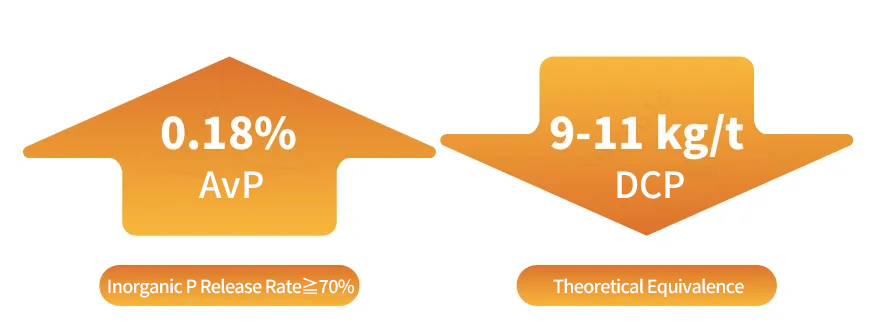
High inorganic phosphorus release: Available phosphorus release reaches up to 0.18% (inorganic phosphorus release efficiency ≥70%), translating into tangible economic returns. In livestock and poultry feed, it can theoretically replace 9–11 kg of dicalcium phosphate per tonne of complete feed. Based on the current DCP price of 4,800 CNY/tonne, the direct cost saving is no less than 40 CNY per tonne of feed.
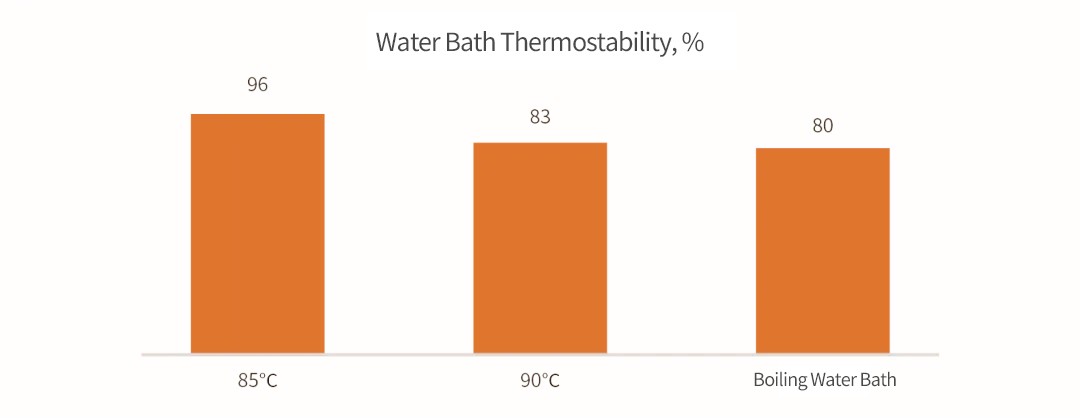
Excellent heat stability: Retains over 80% of enzyme activity after 5 minutes in boiling water bath, compatible with high-temperature feed pelleting processes.
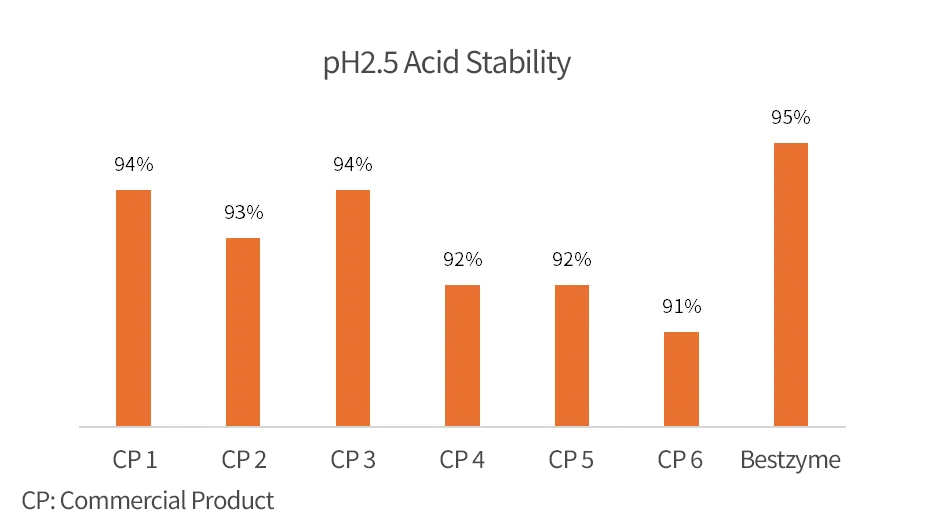
Superior acid tolerance: Preserves enzyme activity under acidic conditions, facilitating phytate hydrolysis in the gizzard/stomach and ensuring consistent phosphorus release. (Internal laboratory test data)
Reliable stability: Backed by Bestzyme' s mature fermentation process and rigorous quality control system, the product exhibits minimal batch-to-batch variation, stable enzyme activity and good flowability.
Against the global backdrop of tightening phosphorus supplies and mounting environmental pressure, technological innovation in the feed industry is far more than a matter of cost accounting. It represents a strategic choice tied to resource efficiency, ecological balance and industrial sustainability. The rollout of phytase serves as a powerful leverage point: biotechnology unlocks a win-win scenario of lower costs, higher productivity and reduced emissions.
Looking ahead, biotechnology is reshaping the fundamentals of the feed industry — from unlocking bound phosphorus and optimising nutrition to shifting from simple raw material substitution to systematic upgrading. We stand ready to collaborate with industry partners to advance this journey toward greener, more efficient and sustainable production.
© Bestzyme. All rights reserved.

