


When we pour a glass of crisp beer and admire its brilliant clarity and dense, lasting foam, few of us notice that biological enzyme preparations play a vital yet quiet role in the industrial journey from malt grain to finished beer. Today, we explore two core challenges that define beer quality from a brewing process perspective.
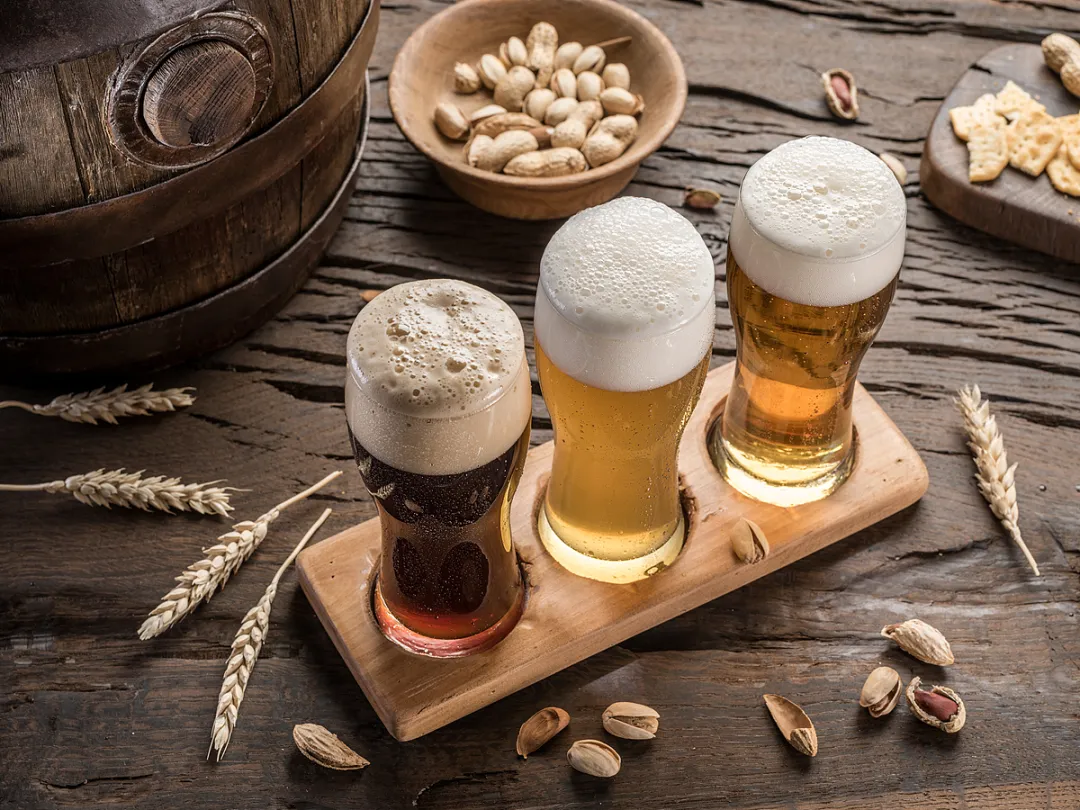
Many have observed that clear beer develops a faint haze after refrigeration, only to turn transparent again as it warms. This phenomenon is known in brewing science as chill haze.
It arises from proteins and natural polyphenols extracted from malt. At low temperatures, these two components bind together like magnets to form tiny particles that scatter light and create cloudiness. This not only compromises visual appeal but also shortens the beer' s shelf life over time.
Traditional processes often rely on adsorbents for forced filtration. By contrast, Bestzyme Proline protease PSEP-30 for beer, produced via advanced technology, delivers a targeted solution. It selectively degrades haze-sensitive proteins to fundamentally mitigate chill haze. Thanks to its high substrate selectivity, it preserves clarity and retains natural polyphenols without compromising foam stability or the beer' s inherent flavour profile.
To craft a cleaner, purer taste with layered complexity, modern brewers often blend multiple premium grains to refine body and flavour. These grains deliver a smooth, refined flavour spectrum, yet unlocking their starch and converting it into fermentable sugars for yeast — and fully releasing their natural grain notes — hinges on a critical step: liquefaction and saccharification.
Upon heating, raw materials undergo gelatinisation, turning the mash into a thick, paste-like slurry. This is where α-amylase, nicknamed the “biological scissor”, comes in: it rapidly cuts long starch chains to reduce viscosity and produce fermentable sugars.
To balance productivity and consistent quality, modern breweries widely adopt high-temperature jet liquefaction. This requires amylase with high catalytic efficiency, alongside strong heat and acid tolerance.
To address this process pain point, Bestzyme has developed thermostable α-amylase Type X1. It maintains high activity across 80–100 ℃, with a broad working pH range of 5.0–6.0, perfectly suited for liquefying starch from diverse grains. Notably, it features low calcium dependence. Ordinary tap water or groundwater can be used directly in production without extra calcium supplementation, bringing greater convenience and efficiency to modern brewing facilities.
From a grain seed to a crisp, clear, malt-forward beer, every micro-step is precisely controlled by biotechnology.
As a dedicated player in industrial enzyme development, Bestzyme keeps empowering the upgrading of traditional brewing with green enzyme engineering technology. We safeguard brewing craftsmanship through science, so every pour delivers pure, consistent, premium flavour.
This toast honours every craftsman committed to brewing excellence.
© Bestzyme. All rights reserved.

